Every growing company eventually asks the same question: do we hire someone internally to run Google Ads, or do we hand the account to an agency? The honest answer is that the right choice depends on your monthly ad spend, your team’s bandwidth, and how fast you need results — not on which option sounds more «in control.» In this guide, we break down the real cost structure behind both models, show you where each one wins, and give you a framework you can apply to your own budget today.

What «In-House» Really Costs: Salary, Tools, and Time
In-house Google Ads management means paying a full-time salary, software licenses, and training costs before a single dollar reaches the ad auction. In the U.S. market, a mid-level PPC specialist typically commands between $60,000 and $85,000 annually, and that figure climbs past $100,000 for someone senior enough to manage a six-figure monthly budget without supervision.
That salary is only the starting line. Once you add payroll taxes, benefits, a seat for a bid-management or reporting tool, and the time a manager spends overseeing the work, the fully loaded cost of one in-house hire often runs 25–40% higher than the base salary alone.
The Hidden Line Items Nobody Budgets For
Most companies underestimate three costs when they first build an internal team:
- Onboarding time. A new hire typically needs 60–90 days to fully understand your account history, negative keyword lists, and conversion tracking setup.
- Tool stack. Platforms for bid automation, call tracking, and competitive intelligence can add $500–$2,000 per month.
- Backup coverage. When your one specialist takes vacation or leaves the company, campaigns often go unmonitored — and unmonitored Search campaigns bleed budget fast.
Certifications and Ongoing Training
Google Ads updates its auction signals, bidding strategies, and ad formats multiple times a year. Keeping one in-house hire current requires ongoing paid training and Google Skillshop certification renewals — a cost most job postings never mention, but one that shows up in performance the moment it’s skipped.

What a Google Ads Agency Actually Charges (and Delivers)
Agencies typically charge either a flat monthly retainer or a percentage of ad spend, usually between 10% and 20%, in exchange for a full team instead of a single hire. That team commonly includes a strategist, a copywriter, and a data analyst — a bench of specialized skill sets that would cost far more to replicate internally at the same headcount.
Flat Fee vs. Percentage-of-Spend Models
The two most common agency pricing structures behave very differently as your budget scales:
| Pricing Model | Best For | Typical Range | Main Trade-off |
|---|---|---|---|
| Flat monthly retainer | Predictable budgets, ongoing optimization | $1,500–$10,000/mo | Cost stays fixed even if spend fluctuates |
| Percentage of ad spend | Larger accounts (six figures+ monthly) | 10%–20% of spend | Management fee grows in lockstep with spend |
| Hybrid (base + performance bonus) | Teams prioritizing ROAS accountability | Base fee + KPI bonus | Requires clearly defined success metrics upfront |
What «Certified Partner» Status Actually Means
Not every self-described «Google Ads expert» carries the same weight. Google Premier Partner status is awarded to a small percentage of agencies based on verified ad spend under management, campaign performance, and product knowledge exams passed by the team. This distinction matters because it directly affects the next benefit.
Access to Beta Features and Google Reps
Agencies holding partner-tier credentials often get earlier access to beta ad formats, dedicated support reps, and account audits directly from Google’s team — resources an individual in-house hire generally cannot request on their own.
Side-by-Side Comparison: Cost, Speed, and Scalability
Here’s how the two models stack up once you look past the sticker price:
| Factor | In-House | Agency |
|---|---|---|
| Time to full productivity | 60–90 days | 1–2 weeks |
| Skill diversity | Limited to one hire’s strengths | Strategist, analyst, copywriter as standard |
| Cost predictability | High (fixed salary) | Variable at scale, fixed at flat-fee tiers |
| Scalability during growth spikes | Requires new hires | Reallocates existing team resources |
| Risk if the person leaves | Campaigns go dark | Continuity built into the team model |
Break-even Ad Spend: When In-House Starts Making Sense
As a general benchmark, once monthly ad spend consistently exceeds $40,000–$50,000, the math starts favoring an in-house hire or a hybrid model, because the agency’s percentage-of-spend fee begins to outweigh a single dedicated salary. Below that threshold, an agency’s shared team structure is almost always the more cost-efficient path.
The Opportunity Cost of a Slow Learning Curve
Even after the 60–90 day ramp-up, an in-house specialist is still learning your specific market by trial and error. An established agency brings pattern recognition from dozens of other accounts in adjacent industries — meaning fewer expensive testing cycles before campaigns hit their stride. We’ve documented this kind of accelerated ramp-up directly in one of our full-service digital marketing case studies, where campaign efficiency improved well before the typical in-house learning curve would have closed the gap.

Beyond the Click: Why Automation and AI Are Changing the Math
Modern account management increasingly depends on automation layers that handle bid adjustments, reporting, and lead routing without manual intervention — and this shifts the in-house versus agency calculation in a direction most budget spreadsheets haven’t caught up to yet.
Workflow Automation vs. Manual Reporting
An in-house hire manually pulling weekly reports spends hours on work that workflow automation agents can complete in minutes, freeing that same person to focus on strategy instead of spreadsheet assembly. Agencies with mature systems already build this automation into their retainer; in-house teams usually have to build or buy it separately.
AI Agents Handling What Junior Hires Used To Do
Tasks that once justified hiring a junior PPC coordinator — bid monitoring, budget pacing alerts, first-pass ad copy variations — are now handled by AI agents built for business productivity. This doesn’t eliminate the need for strategic oversight, but it does change how many people you need to reach the same output.
Where Human Strategy Still Wins
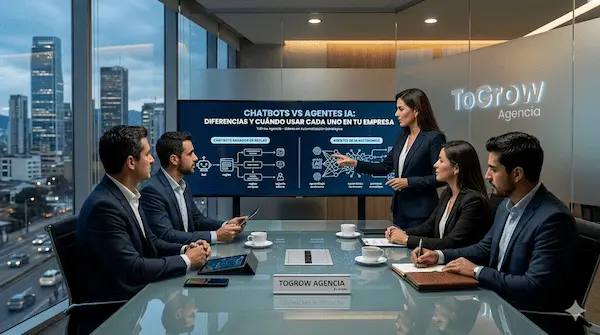
Automation handles volume and speed; it does not replace the judgment required to interpret why a campaign underperforms in a specific vertical, or how to reallocate budget across a multi-channel funnel. This is the layer where both in-house specialists and agency strategists still earn their cost — and it’s worth comparing tools carefully, the same way it’s worth understanding how AI agents differ from traditional chatbots before assuming any two automated systems perform the same job.
Once ad spend converts into inbound calls and form fills, someone still has to respond fast. Many growing accounts now pair their Google Ads investment with AI agents for customer service and support, closing the gap between «click» and «qualified conversation» without adding headcount.

How to Decide: A Practical Framework for Your Business
We recommend running through this checklist before committing budget to either path.
Choose In-House If
- Your monthly ad spend consistently exceeds $50,000
- You have an internal manager capable of overseeing PPC performance
- You need tight, daily integration between ads and internal sales data
- You’re prepared to absorb a 60–90 day ramp-up period
Choose an Agency If
- Your budget sits below the $40,000/month threshold
- You need a full skill set (strategy, copy, analytics) without multiple hires
- You want certified partner access to beta features and Google support
- Speed to launch matters more than building an internal department
The Hybrid Model
Some of the fastest-scaling accounts we work with use a hybrid structure: an internal marketing generalist manages day-to-day communication, while a certified partner agency handles strategy, bid management, and creative testing. This structure combines the internal visibility companies want with the specialized bench an agency provides.
Frequently Asked Questions

Is it cheaper to manage Google Ads in-house or through an agency?
Below roughly $40,000 in monthly ad spend, an agency is typically cheaper because its fee is spread across a shared team. Above that threshold, a single in-house salary often becomes more cost-efficient.
How long does it take an in-house hire to become effective at Google Ads?
Most specialists need 60 to 90 days to fully understand an account’s history, tracking setup, and negative keyword structure before performance stabilizes.
What does Google Premier Partner status actually guarantee?
It confirms the agency has met Google’s thresholds for verified ad spend under management, staff certification, and sustained account performance — it does not guarantee results on any individual account, but it does confirm a baseline level of proven experience.
Conclusion

Neither model is universally «better» — the right decision comes down to your current ad spend, how much internal bandwidth you can dedicate to oversight, and how quickly you need campaigns performing at full capacity. Companies spending below $40,000 a month typically get more value from a certified partner agency’s shared team and faster ramp-up. Companies spending well above that threshold often reach a point where a dedicated in-house hire, supported by automation, makes financial sense.
Stay connected with us on social media to keep up with our latest news, events, and exclusive promotions. Don’t miss a thing — follow our accounts today!

- In-house Google Ads vs. Agency: Decision & Cost Comparison Guide - septiembre 7, 2026
- Case Study: Full-service digital marketing transformation for a US firm - septiembre 4, 2026
- Cómo preparar la infraestructura tecnológica de tu empresa para la automatización - agosto 24, 2026